November to February is the season, and November is the best of it. March is the month to avoid — and the reason is the air, not the heat.
Find a room before you go.
Chiang Mai sits in a bowl of hills, and that shapes its year more than the rain does. From November to February the cool season brings dry days in the high twenties and nights that are genuinely cold by Thai standards — ten to fifteen degrees in December and January, cold enough that the guesthouses hand out blankets.
From late February through April the north burns: farmers clear fields and forest across the region, the hills trap the smoke, and Chiang Mai regularly appears near the top of the world's worst air quality readings in March. It is not a rumour and it is not mild. If you have asthma, small children, or a choice of dates, do not come in March.
November is the pick of the year: the rains have just washed the air clean, the hills are still green, the nights are cool and the peak-season prices have not arrived yet. It is also when Yi Peng and Loy Krathong fall — the lantern and float festivals, on dates that move with the lunar calendar, and the busiest week in the city.
December and January are the classic cool-season months: reliably dry, sunny, and cold enough after dark to want a jacket on Doi Suthep. This is high season, so rooms cost the most and the Old City is full. February is still good, though the first haze usually shows up towards the end of it.

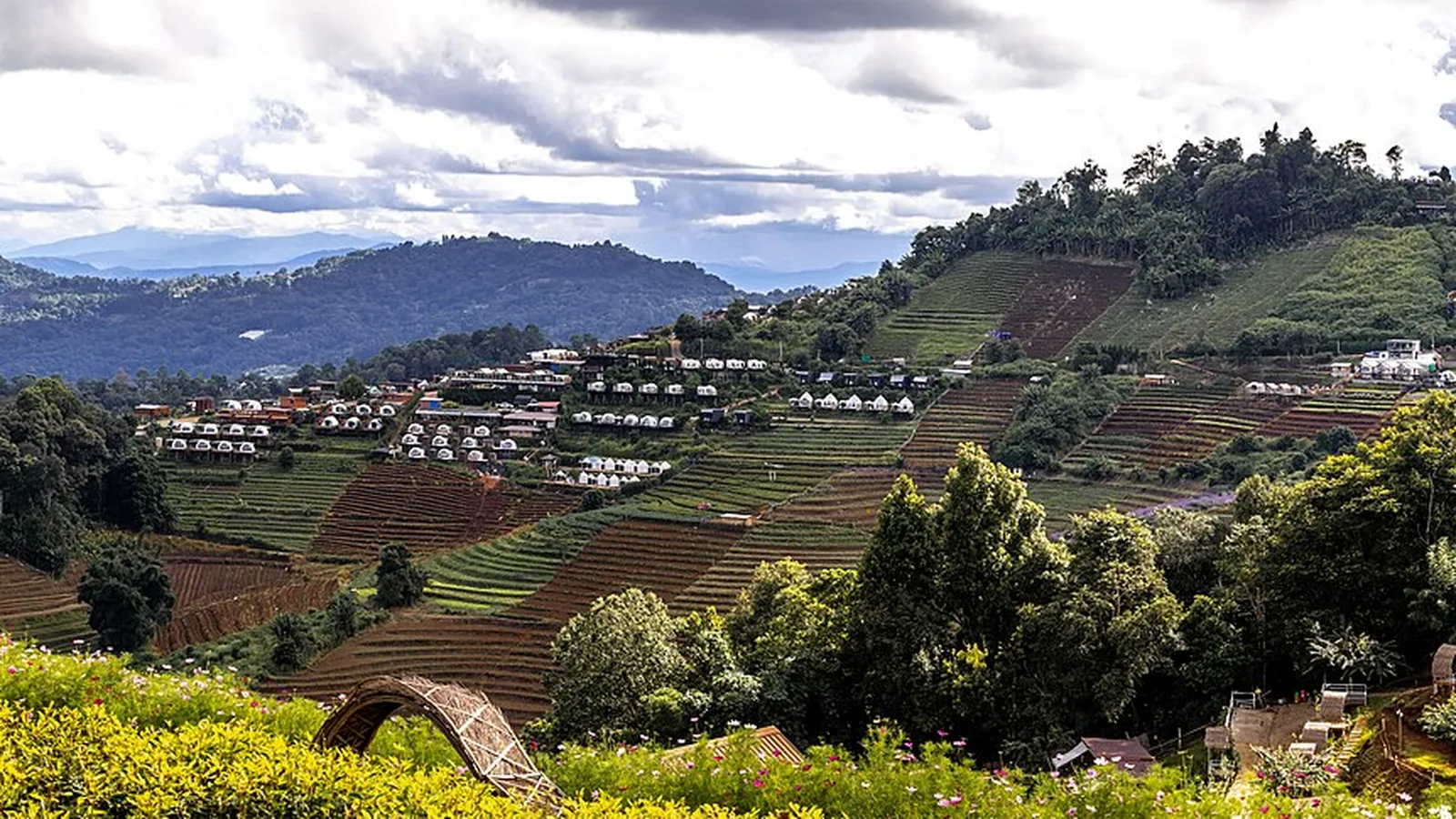
May to October is the wet season, and in Chiang Mai that mostly means heavy afternoon or evening downpours rather than all-day rain. September is the wettest month. The waterfalls run, the rice terraces are luminous, room rates fall by half and the city belongs to the people who live in it.
The one thing to plan around is the roads: mountain routes to Pai, Mae Hong Son and the hill villages get slow and slippery, and a scooter is a worse idea than usual. Late October is the sweet spot — the rain is finishing, the air is as clean as it gets all year, and the crowds have not started.

| January | Cool, dry and sunny — peak season, cold nights |
| February | Still cool and dry, haze creeping in late in the month |
| March | The worst air of the year — hot and smoky |
| April | Very hot, smoky early, Songkran mid-month |
| May | Heat breaking, first rains, air clearing |
| June | Warm and green, afternoon downpours |
| July | Wet and lush, mountain roads slow |
| August | Heavy rain, waterfalls at their best |
| September | The wettest month — quiet and very cheap |
| October | Rain ending, clean air, brilliant late in the month |
| November | The best month: clear, green, cool, Yi Peng |
| December | Cool and dry, high season prices, cold nights |
November to February, and November above all: clean air after the rains, green hills, cool nights and prices below the December peak.
Late February to April, when farmland and forest are burned across northern Thailand. The hills hold the smoke in and Chiang Mai's air quality is among the worst in the world in March.
Yes. May to October is green and cheap, and the rain usually comes as heavy afternoon bursts rather than all day. Mountain roads are the part to be careful about.
In November, on dates set by the lunar calendar, alongside Loy Krathong. It is the busiest week of the year in the city, so book well ahead.
More guides to Chiang Mai and the routes north from the Gulf coast.