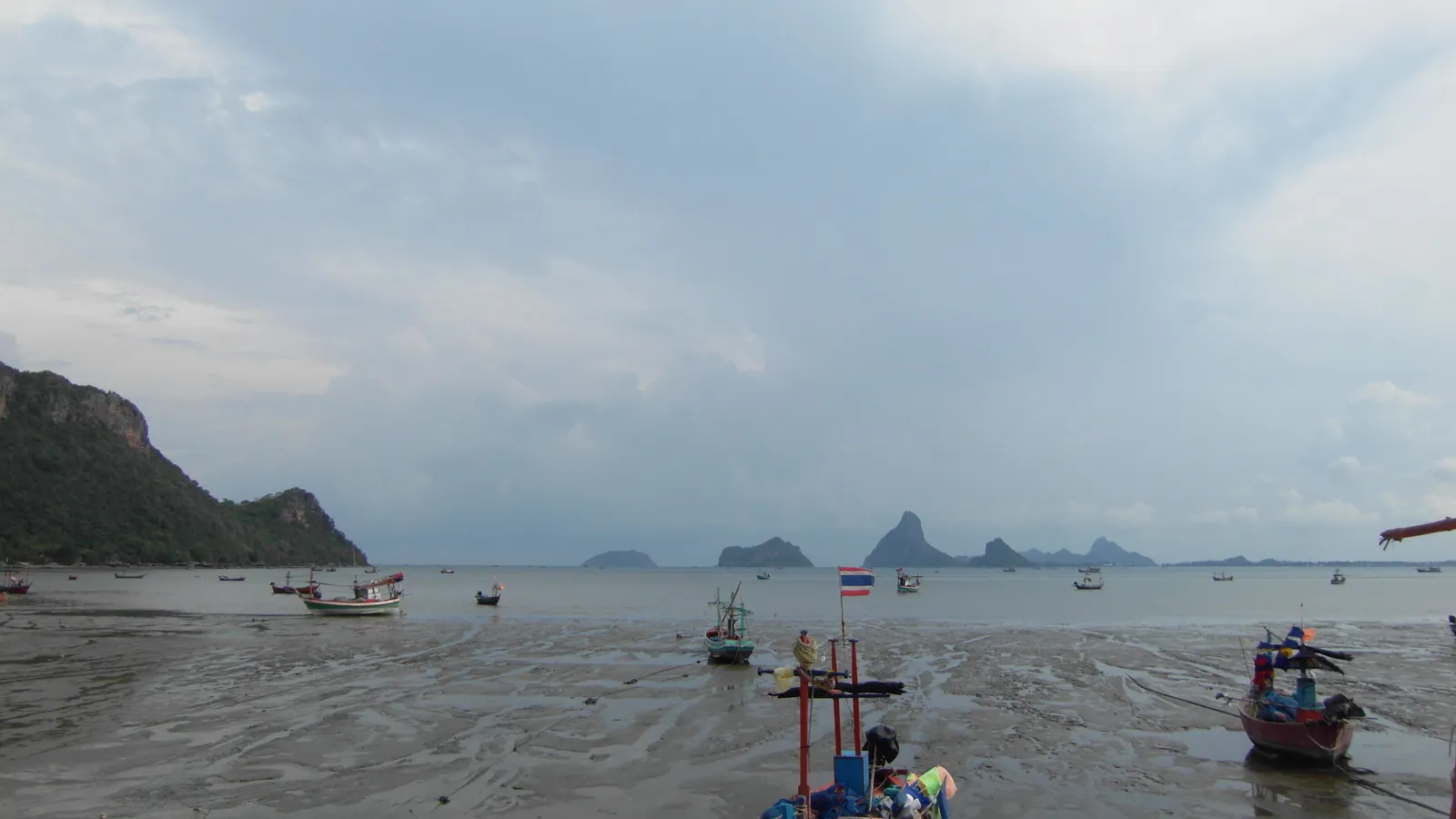
The quietest month of the Thai year — wet in Bangkok, wet on the Andaman side, but surprisingly workable on the Gulf coast, and prices everywhere are at their kindest.
Find a room before you go.
September is when Thailand exhales. The tour groups are gone, hotel rates drop to their lowest of the year, and the whole country turns a deep monsoon green. It is also, honestly, the wettest month for much of the country: Bangkok records more rain in September than in any other month, and the Andaman coast is still being soaked by the south-west monsoon.

The exception — and the reason this site keeps banging the same drum — is the Gulf coast. Ban Krut, Hua Hin, Chumphon and the islands of Samui, Tao and Phangan sit in the lee of that monsoon. You will see more showers than in July, usually short and often at night, but most days still deliver hours of beach weather. If you can travel in September, you get Thailand at its emptiest and cheapest, with a coastline that still holds up.
Affiliate link. If you book through it we earn a commission, at no extra cost to you.
Bangkok and the central plains are at their soggiest — expect dramatic afternoon downpours, flooded sois and the occasional gridlocked commute. The north (Chiang Mai, Pai) is wet too, though the mountains are gloriously green and the waterfalls at full power. The Andaman side is the one to be wary of: Phuket, Krabi and Koh Lanta see persistent rain, rough seas and red flags on the beaches, and many small island operations stay shut.
The Gulf coast tells a different story. Ban Krut, Prachuap and Hua Hin get more showers than in high summer, but they tend to arrive late in the day and clear overnight. Samui, Tao and Phangan are still in their drier window — the Gulf's real rain does not arrive until October and November. Boats run normally and the diving off Koh Tao is still perfectly decent.

Treat it as the value month. Beachfront rooms in Ban Krut and Hua Hin go for green-season rates, and you will often have the sand to yourself from sunrise to dusk. Build days around mornings — swim, cycle and explore early, then let the afternoon shower pass over a long lunch or a massage. Night markets carry on regardless of weather; the one in Ban Krut is at its most local with no tourists around.
It is also a fine month for the indoors-and-under-canopy side of Thailand: temple visits, Thai cooking classes, café-hopping in Bangkok between storms, and jungle trips inland from the Gulf — Khao Sok and Cheow Lan lake are moody and spectacular in the rain. Just keep Andaman beach plans out of the itinerary for now; their moment comes later in the year.

It is the wettest month for Bangkok and the Andaman coast, but not a write-off. The Gulf coast — Ban Krut, Hua Hin, Samui, Tao, Phangan — still gets plenty of dry hours, and prices and crowds are at their lowest of the year.
Rarely. Even in the wettest areas, rain usually comes as heavy bursts of an hour or two, often in the afternoon or overnight. All-day rain happens, but it is the exception rather than the pattern.
The Gulf islands: Koh Samui, Koh Tao and Koh Phangan are still in their drier window, with normal boat services and decent diving. Avoid pinning your hopes on Phuket, Krabi or the Andaman islands — that coast is still in full monsoon.
Yes — it is generally the cheapest month of the year. Hotels discount heavily, flights are at their softest, and even beachfront resorts on the Gulf coast offer green-season rates.
More guides for this stretch of the Gulf coast.