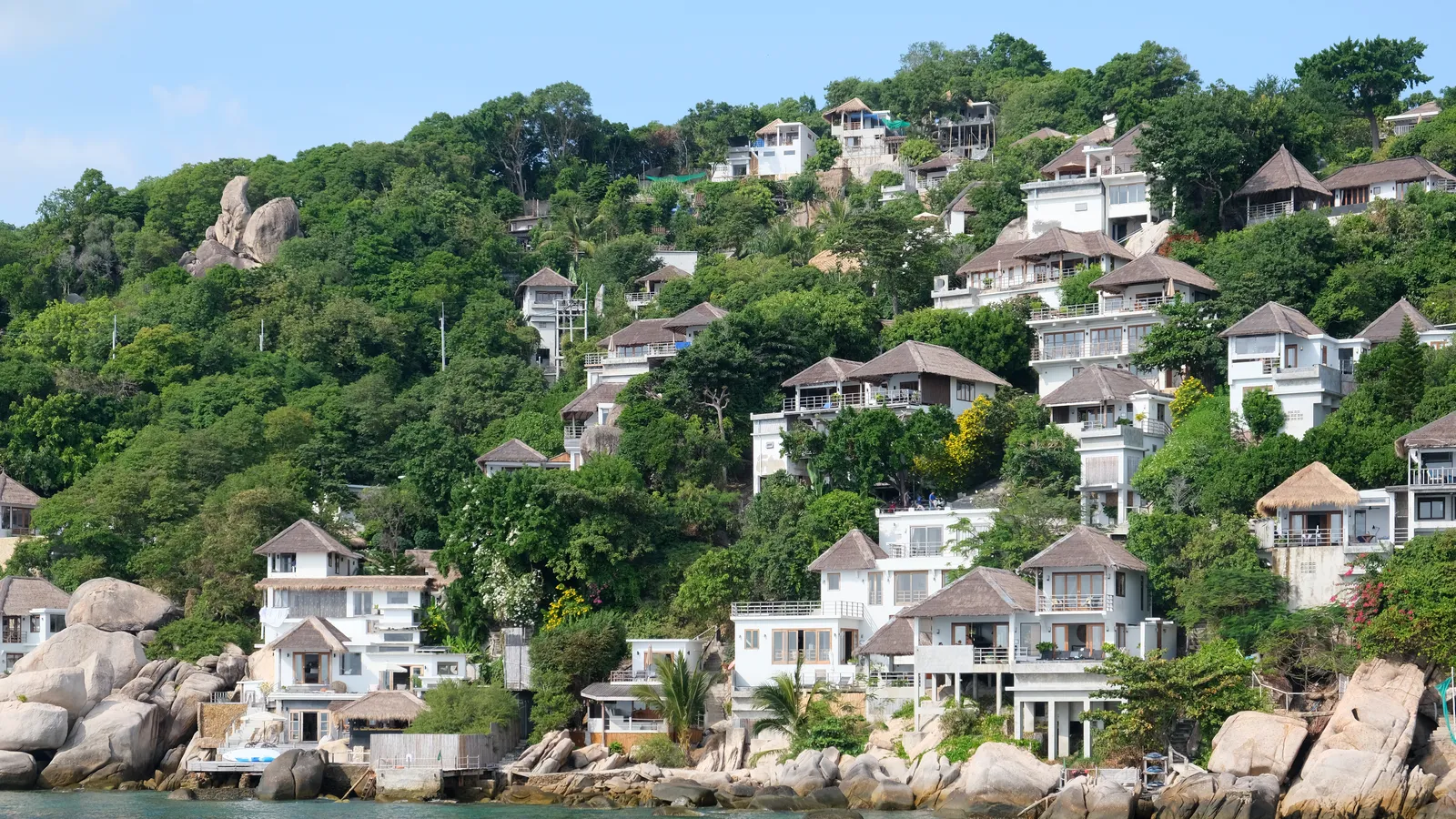
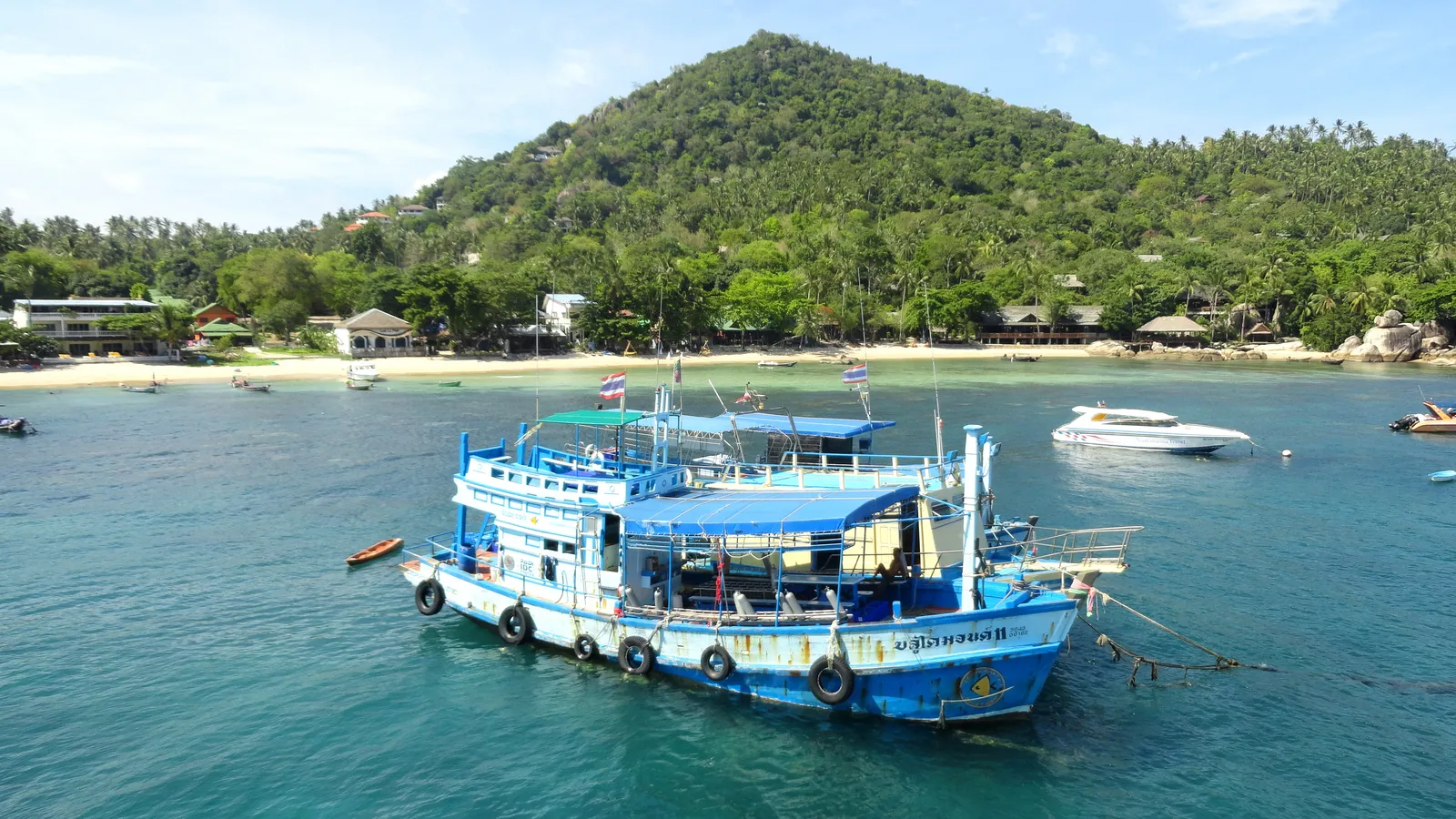
The short answer: February to September is prime diving weather. The months to treat with care are October to December, when the monsoon churns the sea.
Find a room before you go.
Koh Tao is Thailand's diving island, so the question of when to visit is really a question about the water. Like the rest of the Gulf, its rain comes late: October to December is the wet, windy stretch, while the long run from January or February through September is mostly dry, warm and settled.
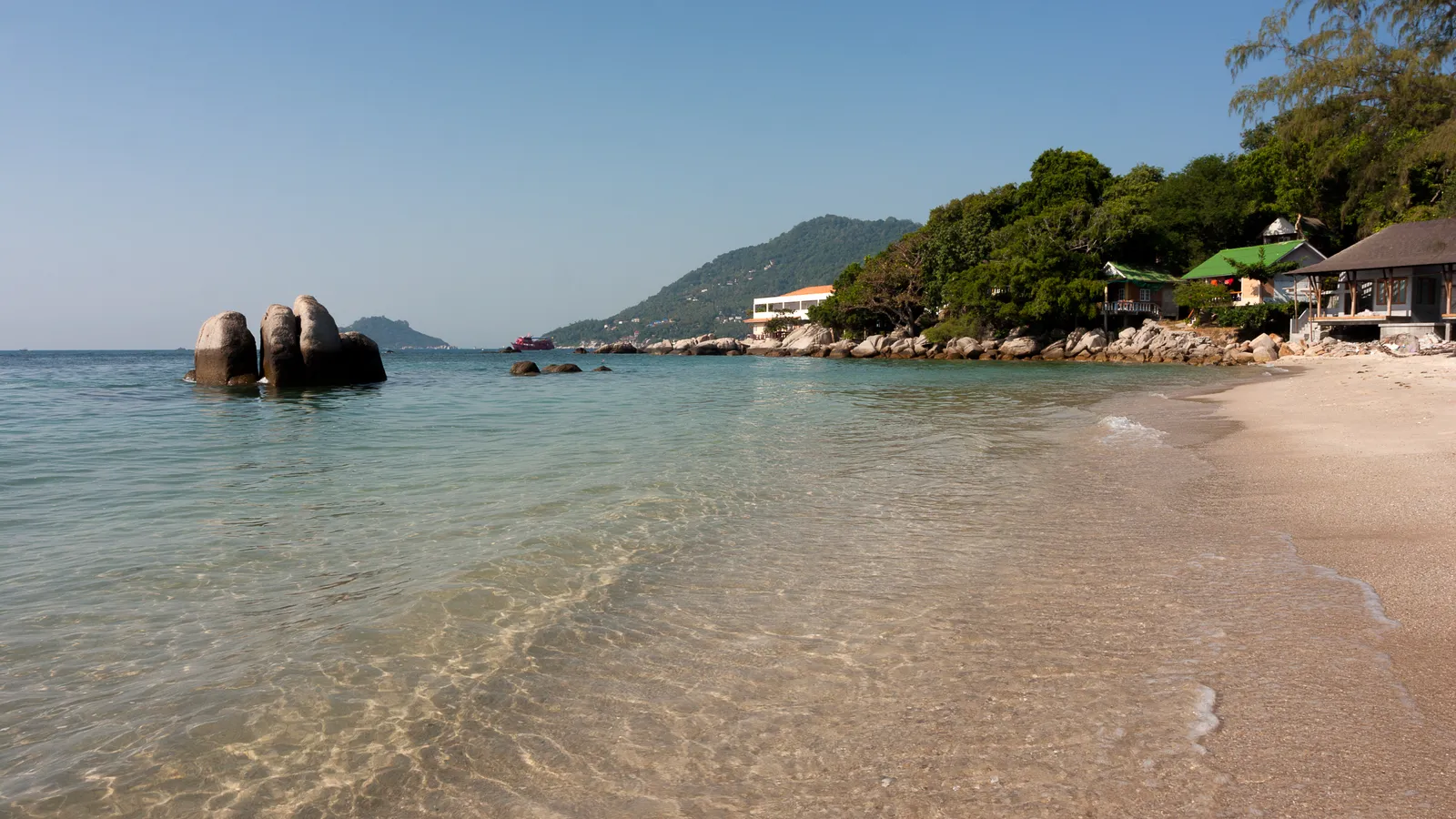
For divers and snorkellers, the calm months are the prize — flat seas, warm water and good visibility, with many regulars rating the late spring and summer months as the best of all. That means the European summer holidays land in genuinely good conditions here, which few first-time visitors to Thailand expect.
Affiliate link. If you book through it we earn a commission, at no extra cost to you.
From late winter to the end of summer, Koh Tao is at its easygoing best: calm crossings from Chumphon, gentle bays and dive boats heading out morning and afternoon. Snorkelling straight off the beach at Shark Bay or around Nang Yuan is at its clearest in these settled months.
March to May brings the hottest days, with the sea warm as a bath; June to August adds the summer crowd of backpackers and dive students, so the better schools and beachfront rooms are worth booking a little ahead. September usually stays kind, with showers building slowly.

The north-east monsoon reaches Koh Tao late in the year. November is usually the peak: heavy rain, strong wind and rough crossings that can cancel ferries for a day or two at a time. Dive schools keep teaching in sheltered bays when they can, but visibility drops and boat days get lost.
It is not a write-off — between the fronts come bright, quiet days with the island half-empty and prices soft. But if your trip is short and diving is the goal, aim for the calm months instead and leave November to the flexible.

| January | Settling down, sea calming |
| February | Dry and calm — diving season under way |
| March | Hot, flat seas, fine visibility |
| April | Hottest month — superb water |
| May | Hot and calm, occasional showers |
| June | Warm, settled — great diving |
| July | Warm, busy with dive students |
| August | Warm, mostly dry, lively |
| September | Still good, showers building |
| October | Rains arriving, sea picking up |
| November | Wettest month — rough crossings |
| December | Windy and showery, slowly improving |
Roughly March to September, when seas are calm and visibility at its best. Diving runs year-round, but October to December brings wind, rain and reduced visibility.
October to December, peaking in November. Like the rest of the Gulf, Koh Tao stays largely dry through the European summer months.
Yes — in the November–December monsoon, rough seas occasionally halt crossings from Chumphon and Surat Thani for a day or two. Build slack into travel plans in those months.
Sightings happen year-round and are never guaranteed. Many divers report clusters of sightings in the settled months around March–May and again around September–October.
More guides for this stretch of the Gulf coast.