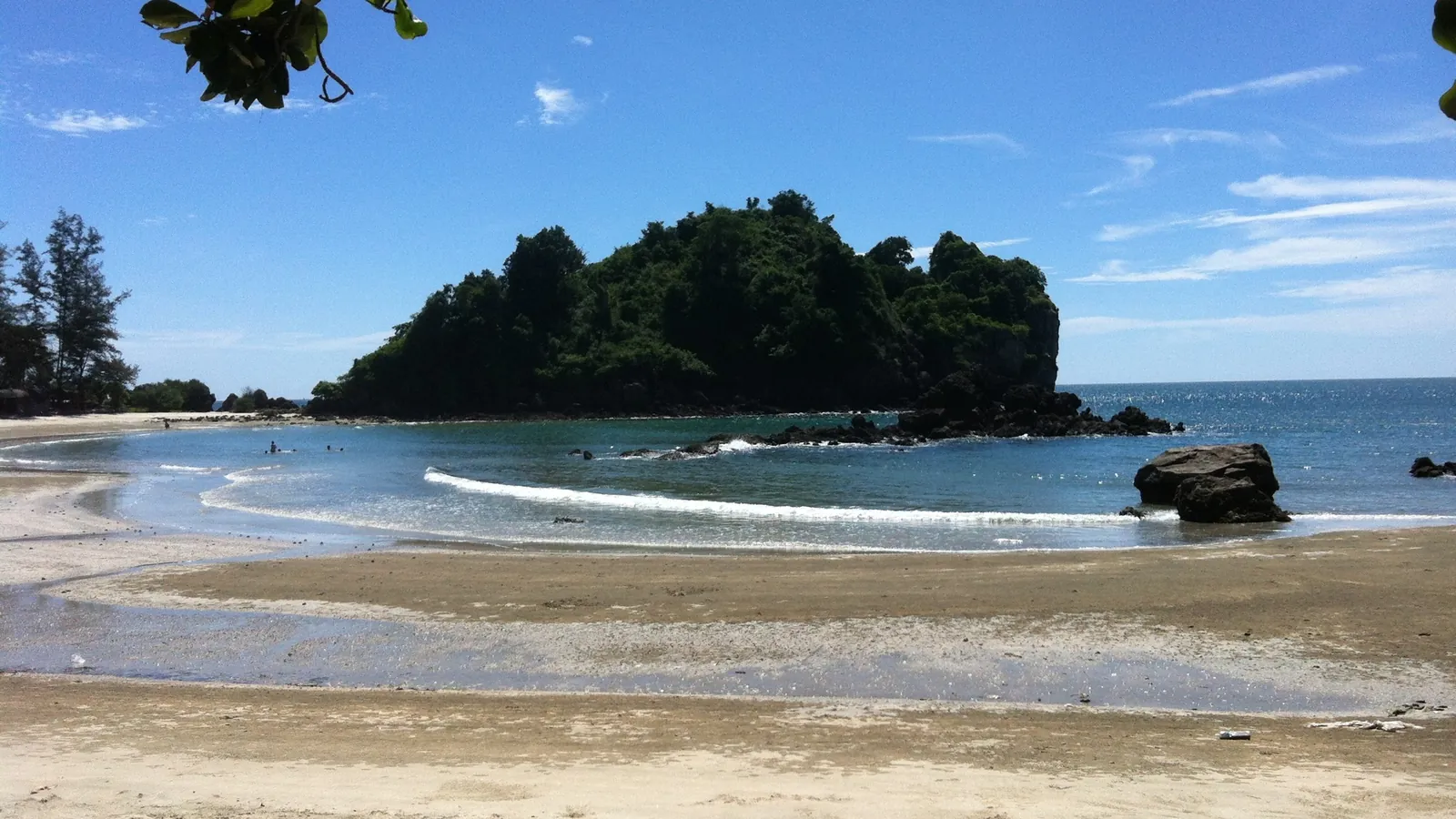
Ban Krut Strand – 12 km Stille
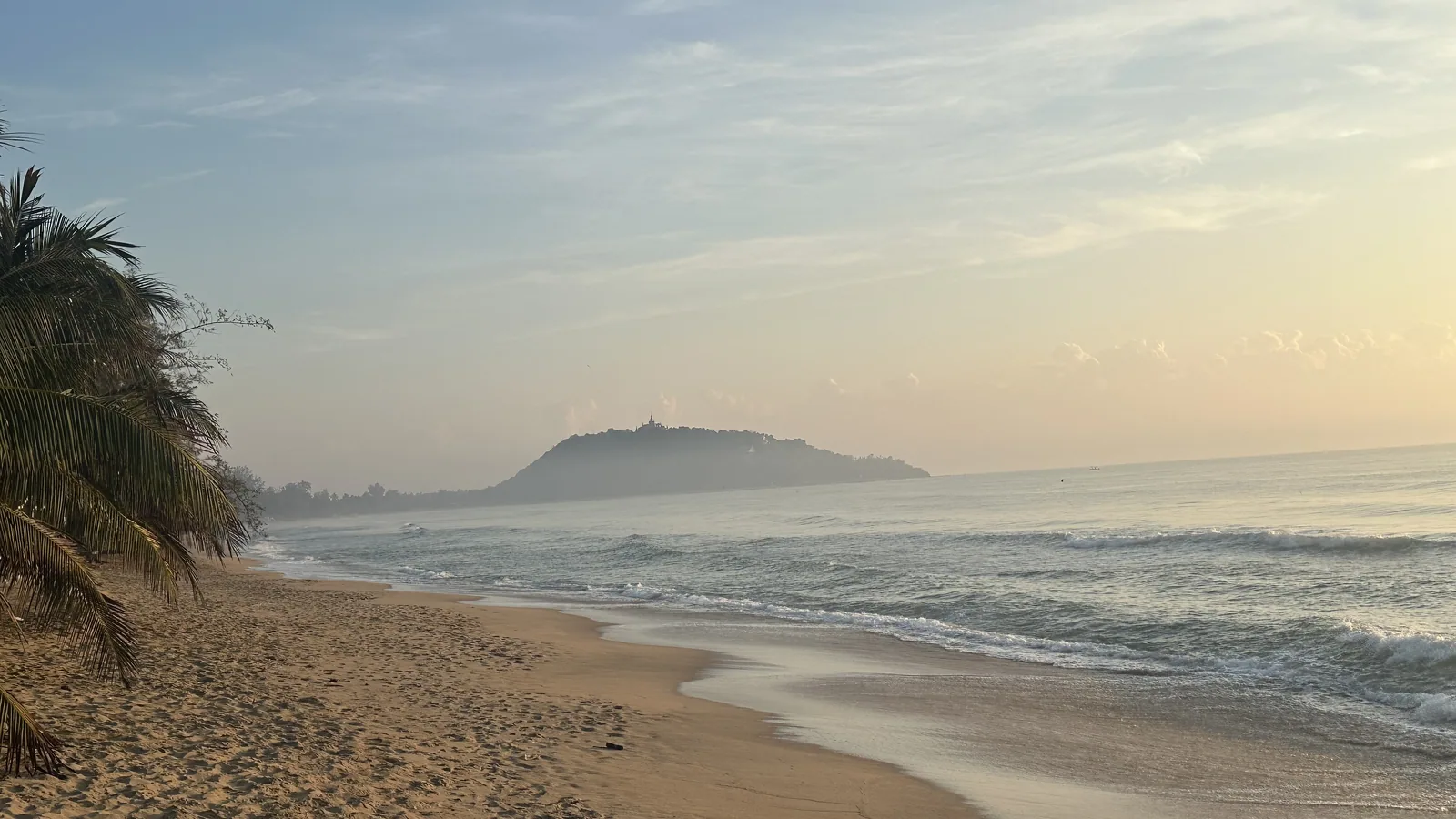
Der Strand von Ban Krut ist von Kokospalmen und Kasuarinen beschattet und verläuft entlang einer Strandstraße parallel zum Ufer. Der Name stammt ursprünglich von den Kaffirlimettenbäumen (Ma Krut auf Thai), die hier einst zahlreich wuchsen. Die Strandstraße bleibt friedlich — es gibt keine Jetskis, keine Strandverkäufer, die auf und ab laufen, und keine Wassersportanbieter, die sich am Sand aufbauen.
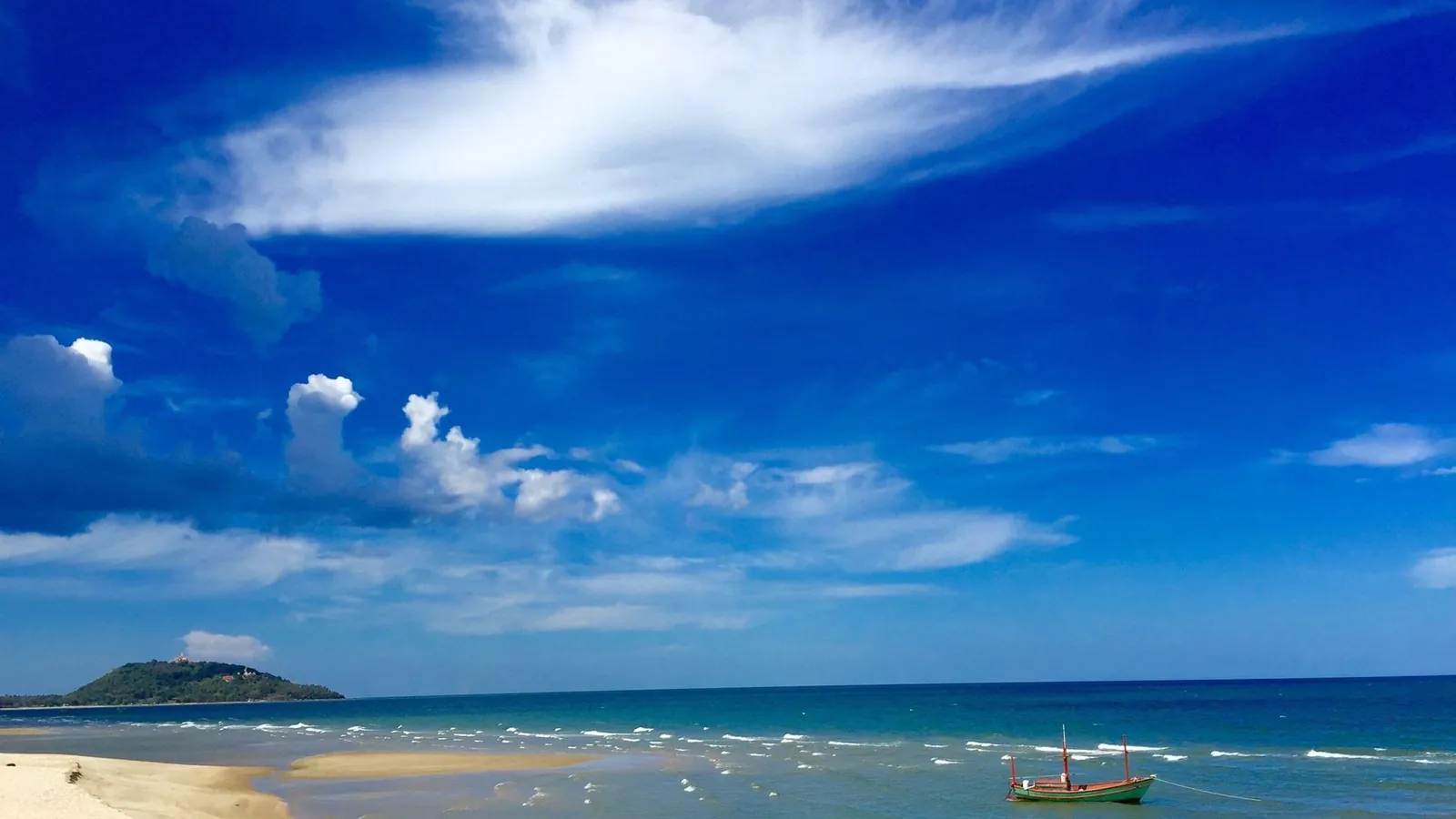
Zwei Strände, getrennt durch den Thong-Chai-Hügel
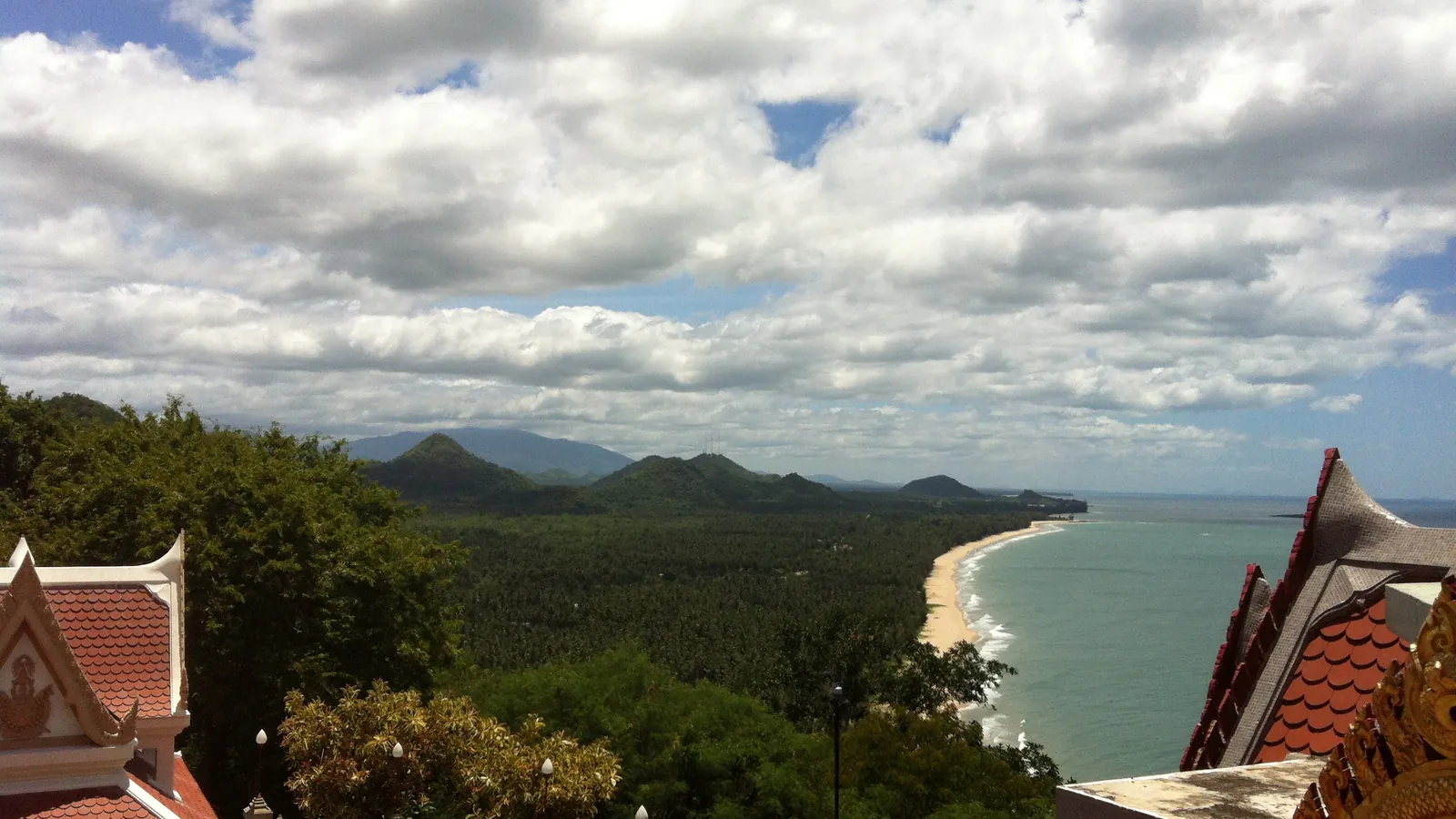
Der Strand besteht eigentlich aus zwei Abschnitten: Ban Krut Nuea (Nordstrand) und Ban Krut Tai (Südstrand). Getrennt werden sie durch den Berg Thong Chai (Khao Thong Chai), auf dessen Gipfel sich die Tempelanlage Wat Thang Sai befindet. Der nördliche Strand ist tendenziell ruhiger mit weniger Resorts; der südliche Abschnitt nahe dem Dorf bietet mehr Restaurants und Unterkünfte.
Meeresbedingungen & beste Reisezeit
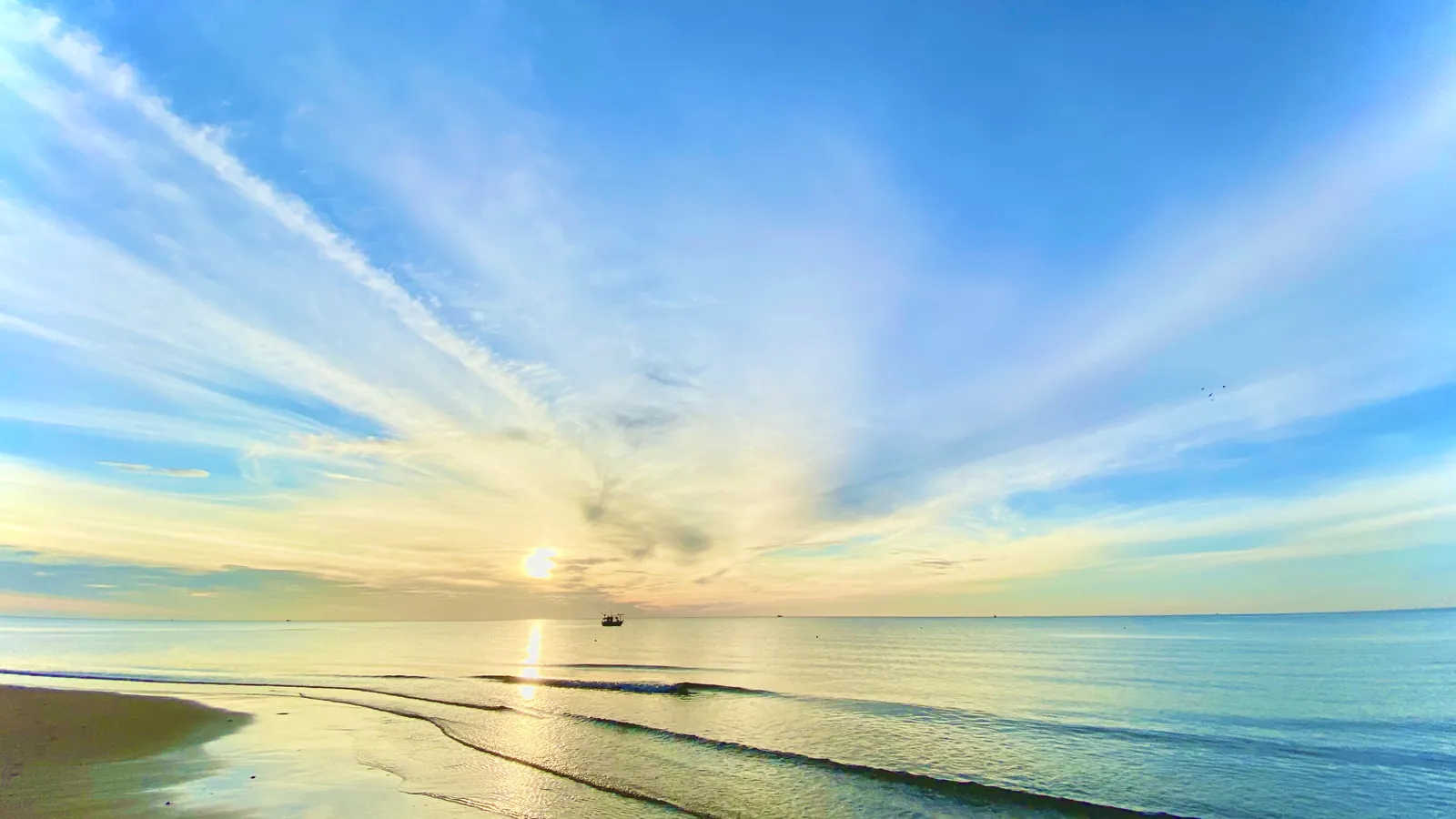
Ban Krut hat ein tropisches Savannenklima. Die besten Monate zum Schwimmen sind November bis April, wenn der Golf ruhig und der Himmel klar ist. Dezember und Januar sind am kühlsten und angenehmsten. Von Mai bis Oktober gibt es mehr Regen und gelegentlich raue See, aber auch deutlich weniger Besucher und günstigere Hotelpreise.
Der regenreichste Monat ist der Oktober — der einzige Monat, in dem ein Besuch nicht besonders zu empfehlen ist. Selbst während des Monsuns ist der Niederschlag hier im Vergleich zur Westküste Thailands recht moderat, meist mit einzelnen Schauern statt anhaltendem Dauerregen.
Strandtipps & Etikette
- Trage mindestens ein T-Shirt und Shorts, wenn du durchs Dorf oder durch Geschäfte gehst.
- Benutze riff-freundliche Sonnencreme und nimm deinen Müll wieder mit.
- Straßenhunde sind am Strand häufig — die meisten sind harmlos, aber gib ihnen Raum.
- An einigen Resorts findest du ein paar Sonnenliegen. Darüber hinaus gilt: Bring deinen eigenen Schatten mit.
- Respektiere Einheimische, die am Strand fischen, Sport treiben oder morgendliche Zeremonien abhalten.
Vom Bahnhof
Der Bahnhof von Ban Krut liegt praktischerweise direkt im Ortszentrum — etwa 1 km vom Strand entfernt. Motorradtaxis warten auf ankommende Züge und bringen dich direkt zu deinem Hotel. Die Strandstraße selbst verläuft über die gesamte Länge beider Abschnitte parallel zur Küstenlinie.