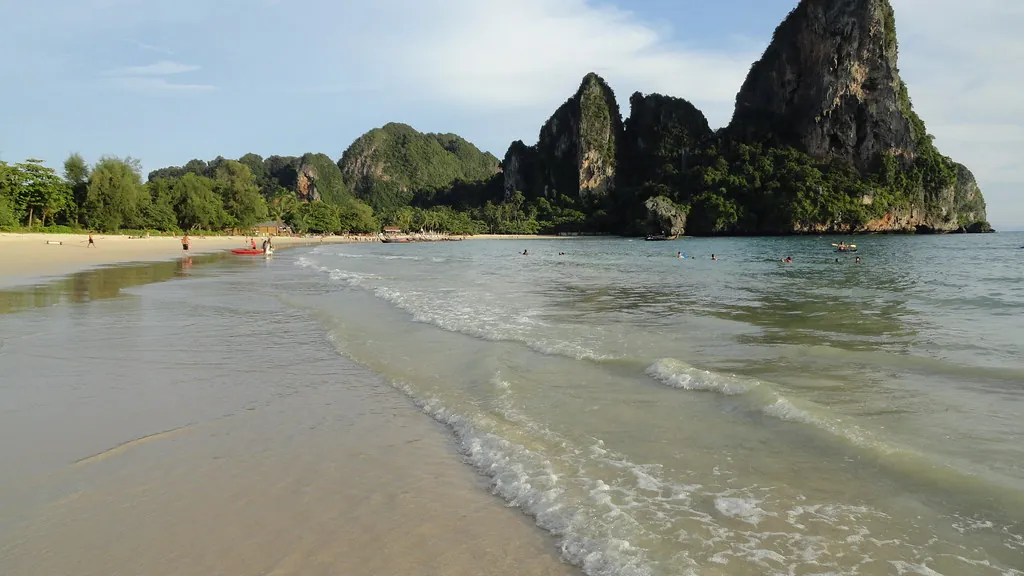
November to April for the water everyone comes for. May to October for half price, green cliffs and a rougher crossing.
Find a room before you go.
Phi Phi's whole appeal is the water: clear enough to see the bottom from the boat, held inside limestone walls. That clarity is seasonal. From November to April the Andaman is calm, visibility is at its best and the snorkelling and diving trips run every day.

From May to October the south-west monsoon pushes swell into the same bays. Rain comes in heavy bursts rather than all day, and there is still plenty of sun — but the sea is churned up, the ferry crossing from Krabi or Phuket is rougher, and the water loses much of the postcard clarity.
Affiliate link. If you book through it we earn a commission, at no extra cost to you.
Maya Bay, on the uninhabited island of Phi Phi Leh, was closed completely for several years so the reef could recover, and it reopened under strict rules. Boats no longer enter the bay itself — they moor on the back side and visitors walk through — and swimming inside the bay is not allowed.
It also closes every year during the monsoon months of August and September. If Maya Bay is the reason you are coming, plan for the dry season and go early in the morning, before the day boats from Phuket arrive.

November and late April are the best value: calm sea, everything open, and prices below the peak. December to February is the most reliable stretch of weather in the year and the busiest — Christmas and New Year on Phi Phi are booked out months ahead and priced accordingly.
March and April are hot and dry, with April bringing both the year's highest temperatures and Songkran, the national water festival. From June to October rooms are cheap and the island is calm in a completely different sense: fewer people, fewer boats, and some places closed for the season.

| January | Clear, calm, very busy — peak season |
| February | Hot and dry, the best water clarity of the year |
| March | Hot, dry and reliable, still busy |
| April | Hottest month, Songkran mid-month, season ending |
| May | Monsoon begins, prices fall, first swell |
| June | Warm rain in bursts, green and much quieter |
| July | Wet with sun between showers, cheap rooms |
| August | One of the wettest months — Maya Bay closed |
| September | Wettest and quietest — Maya Bay closed |
| October | Rain easing, sea settling late in the month |
| November | Season turns, everything reopens — best value |
| December | Dry and clear, prices climb towards Christmas |
November to April, and within that November or late April if you want the calm sea without the peak-season prices and crowds.
No. It closes annually during August and September, and the rules elsewhere in the year are strict: boats moor on the far side and swimming in the bay is not allowed.
Green, cheap and quiet, with rain in heavy bursts rather than all day. The sea is rougher, the crossing less comfortable and the water less clear.
June to October. Room rates fall sharply and the island is far emptier, though some restaurants and bars close for the season.
More Koh Phi Phi and Andaman coast guides, plus the rest of Thailand's islands.